
A Gentle Introduction to Artificial Intelligence
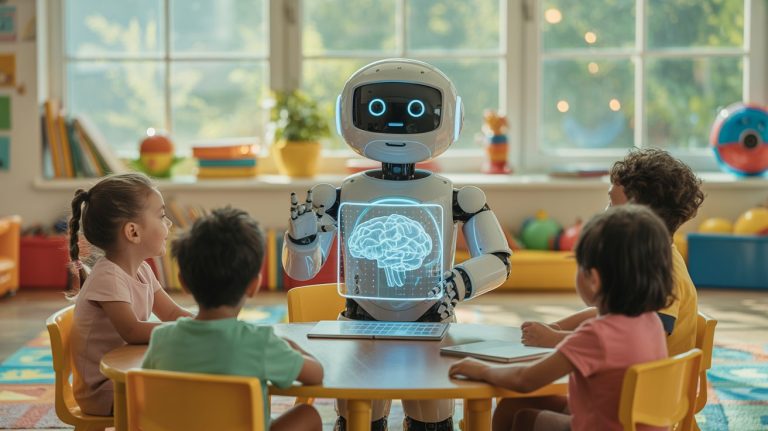
Artificial Intelligence (AI) has become one of the most popular buzzwords in recent years. Everyone seems to be talking about it, but only a few truly understand what it really means. At The Prime Step Institute, we aim to break down AI concepts in a simple and practical way. Through this blog series, we’ll explain what AI actually is, why it has become so important, how it connects with machine learning, and how you can start your journey in this field.
If you are new to coding, don’t worry! You just need a little familiarity with Python, and if you don’t have that either, we’ve got your back. Our beginner-friendly Python tutorials will help you get started with the basics before you dive into AI and machine learning projects.
What is Artificial Intelligence?
AI has been defined in different ways by experts, but one of the most widely accepted definitions comes from John McCarthy and Marvin Minsky (1959). According to them, AI refers to the ability of a machine or program to perform a task that would normally require human intelligence.
This idea is rooted in Alan Turing’s famous “Turing Test” (1950), which suggests that if a machine behaves in such a way that it is indistinguishable from a human, then it can be considered intelligent.
In simple terms, AI systems are designed to mimic human-like capabilities such as learning, reasoning, decision-making, planning, problem-solving, vision, and speech recognition.
By the end of this tutorial series, you’ll understand:
The history and timeline of AI
The two main approaches to AI
How machine learning and deep learning fit into AI
The AI revolution in recent years
Why AI has grown so rapidly
A Quick Look at AI’s Journey
The term “Artificial Intelligence” was first introduced in 1956 during a conference at Dartmouth University, led by John McCarthy. Experts at the event debated on how machines could be made to think intelligently. Two major approaches were discussed:
Top-down approach – Programming computers with sets of rules based on human logic.
Bottom-up approach – Building models inspired by the human brain (neural networks).
In 1959, Arthur Samuel introduced the concept of “Machine Learning.” By 1969, Marvin Minsky created Shakey, a robot that could make decisions based on its surroundings, although it was quite slow.
Despite early optimism, AI progress slowed down as expectations outpaced results. In the 1980s, instead of focusing on machines that could “do everything,” researchers shifted to building systems specialized in specific tasks. For instance, the “RI system” (1986) helped configure computer orders and saved millions of dollars.
From there, major breakthroughs began to happen:
1988 – IBM introduced statistical methods for language translation.
1997 – IBM’s Deep Blue defeated world chess champion Garry Kasparov.
2008 – Google launched speech recognition on iPhone.
2012 – AlexNet classified images with high accuracy, revolutionizing deep learning.
2014 – Google’s self-driving car passed the official driving test.
2016 – AlphaGo beat the world champion in Go, a far more complex game than chess.
Two Major Categories of AI
Narrow AI (Weak AI):
Focused on performing specific tasks within a limited scope. Examples include self-driving cars, recommendation systems, Siri, Google Assistant, and chatbots.Artificial General Intelligence (AGI or Strong AI):
A hypothetical form of AI that can perform any intellectual task like humans. Though it often appears in science-fiction movies, we are still far from achieving it in reality.
The AI Revolution
We are living in the Fourth Industrial Revolution, where AI, robotics, the Internet of Things (IoT), and nanotechnology are reshaping industries. Governments and global companies are investing heavily in AI-driven innovations.
AI applications today are vast:
Automotive: Autonomous vehicles optimize routes and reduce travel times.
Manufacturing: Robots perform repetitive or hazardous tasks efficiently.
Healthcare: AI assists in surgeries, diagnoses, and even virtual patient care.
Banking: Algorithms predict creditworthiness and detect fraud.
Entertainment: AI generates music, creates digital art, and recommends personalized content.
Social Media & Marketing: AI decides what ads to show, who you should connect with, and what content appears in your feed.
Why AI is Growing So Fast?
Two key reasons:
Powerful Computers
Back in 1956, the IBM 7090 could perform around 24,000 operations per second. Fast-forward to today, and modern processors like AMD’s Bulldozer FX can handle trillions of operations in a second. With such power, computers can handle massive datasets at lightning speed.Data Explosion
The rise of the internet and social media has generated unimaginable amounts of data. Every online action—liking a post, making a purchase, registering for a course—creates valuable data. The world generates over 2.2 billion gigabytes of data every day. AI thrives on this abundance of data to learn and improve.
Wrapping It Up
AI systems don’t need every step programmed into them. Instead, they learn from data and experience, much like a child learns from exploring the world. With each interaction, they improve and minimize errors.
Artificial Intelligence is not just a trending topic—it’s shaping our future. While true human-level AI is still far away, narrow AI has already transformed industries and everyday life. With continuous research, faster processors, and endless data, AI will only grow more powerful in the coming years.
At The Prime Step Institute, we believe that learning AI today opens the door to endless opportunities tomorrow. Whether you’re a beginner or already familiar with programming, our structured learning path will guide you toward mastering AI, machine learning, and data science step by step.